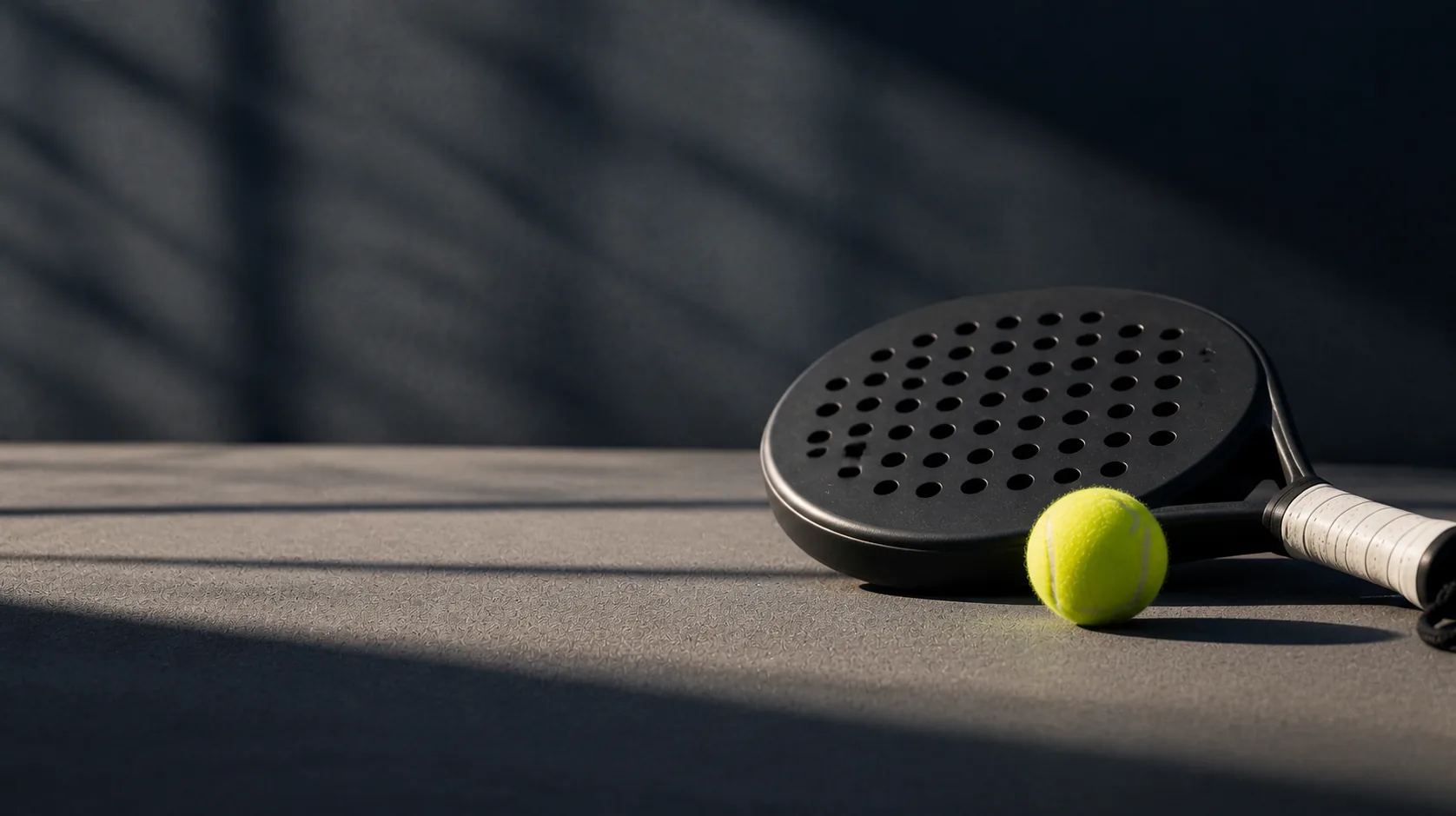


The four padel formats you'll meet most often: round-robin leagues (everyone plays everyone, league table at the end), knockouts(lose and you're out), Americano (rotating partners, individual scoring) and Mexicano (rotating partners by running rankings). For weekly competitive play, round-robin is the gold standard. Padel Loop runs round-robin leagues.
Why format matters
The format defines how often you play, who you play, what you play for, and how good you have to be to enjoy it. A casual social Americano with mixed levels is a different sport-experience from a round-robin league with promotion and relegation, even though both involve four people on a padel court.
Round-robin leagues
Each team plays every other team in the division at least once. Wins score points, sometimes with bonus points for sets won or close matches. After all fixtures, the team at the top of the table wins the season.
Pros
- Guaranteed games — you don't go home after one loss.
- Sample size — over 7 fixtures, the table reflects real form.
- Builds community: you play (and probably know) everyone in your division.
- Excellent for promotion/relegation across seasons.
Cons
- Takes a season to play out — not great for one-day events.
- Needs a fixed group of teams who'll commit for the full run.
How Padel Loop uses it
Padel Loop's structure is round-robin: 8 teams per division, each playing 7 fixtures (everyone plays everyone once) over the course of a season. End-of-season standings drive promotion and relegation between divisions in the next season. See the full league rules for scoring details.
Knockout / single elimination
Standard tournament format: pairings draw against each other, lose once and you're out, eventually only one team is left. Used for most weekend tournaments.
Pros
- Fast — a one-day or weekend event can produce a winner.
- High-stakes — every point matters.
- Great for comparing yourself against players outside your normal circle.
Cons
- You travel and prepare to play one match if you lose first round.
- Variance — unfair to call the winner "best" over one day.
- Bad-luck draws can destroy a great team early.
Double elimination
A knockout variant where you have to lose twice to be out. There's a winners' bracket and a losers' bracket. The losers' bracket eventually produces a finalist who plays the winner of the winners' bracket.
When it works
Tournament organisers use it when there are enough players for a proper bracket and they want to soften the "one bad day = out" problem of single elimination. Better fairness than single elimination, but takes longer.
Americano
A rotational social format. Instead of fixed teams, players rotate partners across short games. Points are scored individually based on games won. After all rotations, the player with the most individual points wins.
When it works
- One-off social events for 6–16 players.
- Mixers where you don't want fixed teams.
- Mixed-level groups — playing with stronger and weaker partners balances out.
Why it's not for serious league play
Because partners rotate, results reflect partner luck as much as skill. Great for community, less great for measuring performance over a season.
Mexicano
A "competitive Americano". Same rotating-partner principle, but pairings are determined by current rankings — players closest in running score get paired up. Over time, the best players play each other and the rankings settle.
Pros
- More competitive than Americano.
- Great for club socials with a leaderboard.
Cons
- Needs a scorekeeper or app to do the dynamic pairings.
- Still partner-luck heavy compared to fixed-team leagues.
Other formats you'll meet
Ladder leagues
Players are ranked on a ladder. To climb, you challenge a player above you and try to beat them. Loose, slow, requires self-organisation. Not common in UK padel.
King / queen of the court
Winners of each short game stay on; losers come off. Multiple rotating courts, players rotate as needed. Very popular for casual socials. No real structured outcome — pure fun.
RICO / Liga Padel formats
Various Spanish/Italian league software products run different flavours of round-robin and knockout, often with mid-season cup competitions and play-offs. Most UK amateur leagues just use simple spreadsheets.
How to pick the right format for you
- Want a regular partner and weekly fixtures? Round-robin league is the answer. Join Padel Loop.
- Want a one-off competitive weekend? Knockout or double-elimination tournament.
- Want to meet new players, mixed levels, no commitment? Americano or king-of-the-court mixer.
- Want something between social and competitive? Mexicano.
Frequently asked questions
What is the most common padel league format?
Round-robin is the most common amateur padel league format. Each team plays every other team once, with points awarded for wins (and sometimes draws or sets won). Padel Loop runs round-robin leagues with 8 teams playing 7 fixtures.
What is an Americano padel format?
Americano is a rotational social format where players continually swap partners across a series of short games, with individual points scored. It's popular for one-off socials and beginner-friendly events but is not used for serious competitive league play.
What is a Mexicano padel format?
Mexicano is a variation of Americano where partner pairings rotate based on running rankings rather than fixed schedules — players closest in score keep pairing up. It's competitive social play, ideal for club mixers.
Are padel leagues better than tournaments?
For regular play, leagues beat tournaments. Leagues give you guaranteed weekly fixtures across a season; tournaments are intense one-off weekends. Tournaments are great for stretching yourself and meeting wider players; leagues are better for sustained improvement and community.
How do promotion and relegation work in padel leagues?
In leagues with promotion and relegation (like Padel Loop), the top teams in each division move up to the next division for the following season, and the bottom teams move down. Over a few seasons it sorts everyone into the right competitive level.
Want a structured round-robin season? See Padel Loop's league rules or join the waitlist for London, Birmingham or Nottingham.