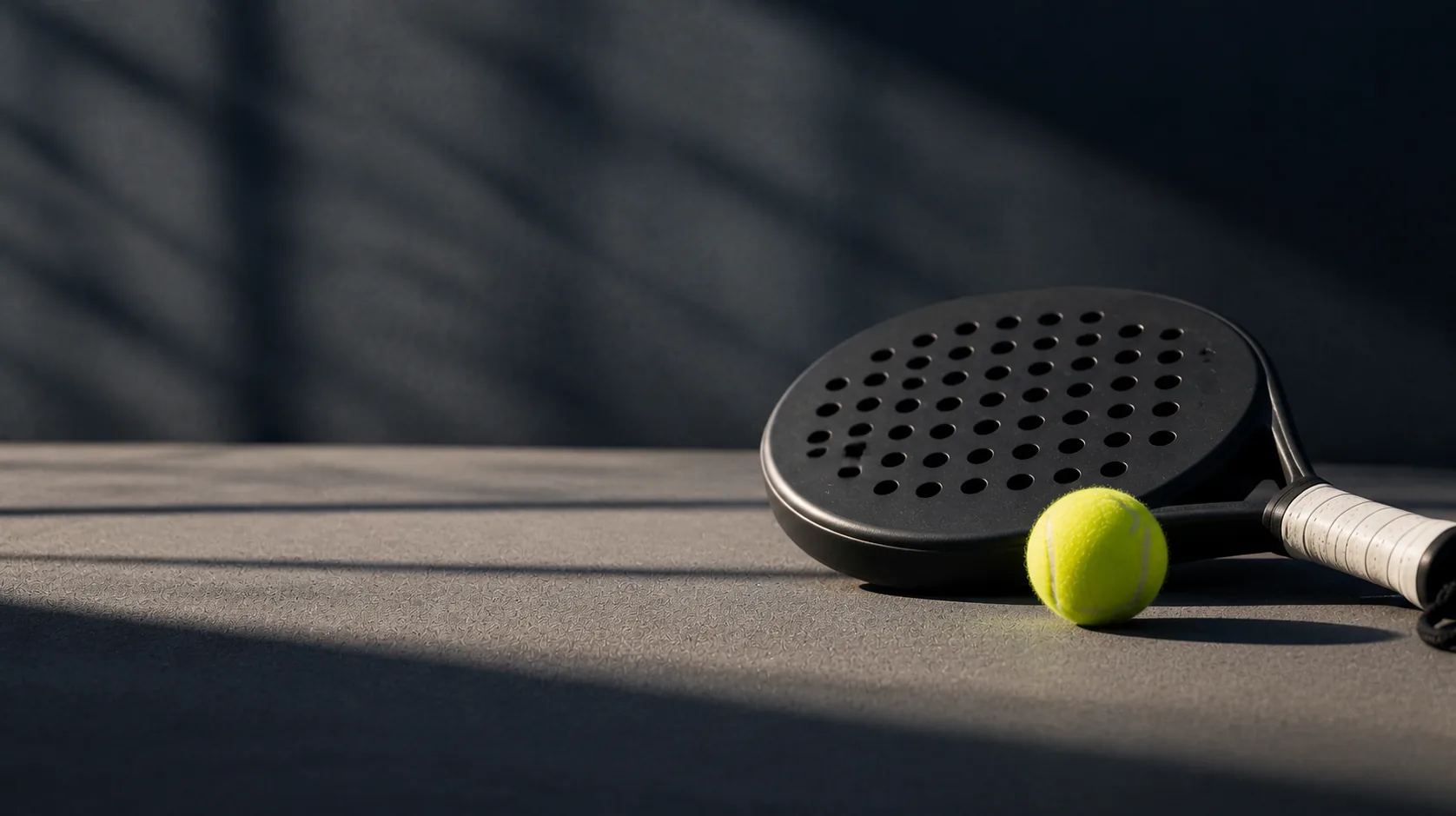

For your first padel racket, look for a round-shaped, 350–365 g, low-balance (handle-heavy) racket with a soft EVA core, in the £80–£150range. That combination is the most forgiving — you'll hit cleaner shots, develop better technique, and protect your wrist and elbow while you're learning.
The four things that actually matter
Before you stare at racket pages with too many options, know that for a beginner, only four specs really matter:
- Shape (round, teardrop, or diamond)
- Weight (in grams)
- Balance (where the weight sits along the racket)
- Core density (soft, medium or hard)
Get those four right and you have a beginner-friendly racket from almost any reputable brand. Get them wrong and even an expensive racket will feel awful.
Shape — pick round
Padel rackets come in three shapes, distinguished by where the sweet spot sits and where the racket is widest.
| Shape | Sweet spot | Best for | Recommended for beginners? |
|---|---|---|---|
| Round | Centre of the face, large | Control, defence, learning | Yes — best choice |
| Teardrop | Middle/upper, medium | All-round play | OK — once consistent |
| Diamond | High up the face, small | Power, smashing | No — punishing |
A diamond-shaped racket can hit huge smashes — but only if you hit the sweet spot, and the sweet spot is small. Beginners miss it constantly, which leads to mishits, jarring shocks through the wrist and bad habit formation. Round wins for beginners.
Weight — go light
Padel rackets generally weigh between 340 g and 385 g. The differences sound small but feel huge over a 90-minute match.
- 340–355 g (light):easy to manoeuvre, better for technique work and women's rackets, lower power.
- 355–370 g (medium): the sweet spot for most beginner and intermediate adult players.
- 370–385 g (heavy): more power and stability, but harder on the arm and slower in defensive situations.
For most beginners, 355–365 g is ideal. Save the heavier rackets for when your shoulder, wrist and elbow are conditioned to padel.
Balance — handle-heavy
Balance is where the racket's weight sits along its length:
- Low balance (handle-heavy): easier to control, more manoeuvrable, kinder on the wrist. Goes hand-in-hand with round shape.
- Mid balance: all-round.
- High balance (head-heavy): more power, harder on your arm, slower hands. Goes hand-in-hand with diamond shape.
A round, low-balance racket is the most forgiving configuration. Almost every reputable brand sells one. Pick the colour you like.
Core density — soft
Inside every padel racket is a foam core. It's usually one of two materials, in different densities:
- EVA soft / FOAM: springy, gentler on the arm, more control feel. Best for beginners.
- EVA medium: all-round.
- EVA hard: stiff, stable, more power, harsher on the arm. For advanced players.
Beginners should pick soft EVA or FOAM. It's kinder to your joints, easier to generate clean shots and helps you feel the ball.
Grip & wrist strap
Two small things people forget about:
- Overgrip. Wrap a fresh overgrip on top of the factory grip. It changes feel, absorbs sweat, and a worn one is the fastest way to mishit. Replace every 10–20 sessions. ~£3 each.
- Wrist strap.The strap that comes with most rackets is mandatory at most clubs and not negotiable in league play — rackets fly out of hands on smashes and they cost £200 to replace someone's glass with. Always wear it.
Reputable brands
Brands you'll see in the UK that consistently make good beginner-friendly rackets:
- Bullpadel — Spanish brand, used by many pros, full range from beginner to elite.
- Babolat — strong tennis heritage, padel range is accessible and beginner-friendly.
- Head — wide range, good warranty support in the UK.
- Wilson — same.
- Nox — strong control-oriented rackets, beloved by coaches.
- Adidas — clean designs, broad range.
- Black Crown — Spanish, very popular among club players.
- Royal Padel — older brand, classic feel, durable.
Don't obsess over brand. Filter by shape (round), weight (~360 g), balance (low) and price (£80–£150), then choose from whatever you find within those.
Hire before you buy
For your first one to three sessions, just hire a racket from the club. It's usually £3–£8. You'll learn whether you actually enjoy padel before spending £100. Many clubs let you try a couple of different demo rackets across sessions.
Once you've played 3–4 times and decided you're committed, buy. By then you'll also have a feel for what kind of racket you're comfortable with.
When to upgrade
Don't upgrade until your shots are consistent. Most players upgrade too early because they think a more expensive racket will fix their game — it won't. A rough rule:
- You're hitting the sweet spot the majority of the time, even under pressure.
- You can place balls cross-court at will and lob with a degree of intent.
- You've outgrown the control feel and are deliberately holding back to keep the ball in.
At that point a teardrop-shaped, slightly heavier intermediate racket will help you. Until then, it won't.
Where to buy in the UK
- Specialist online retailers — Padel Nuestro UK, Pure Racket Sport, Padel Reviews, Padel Direct.
- Decathlon — strong own-brand starter rackets, well-priced, easy returns.
- Your local club shop — usually pricier but you can hold the racket and ask the coach.
Frequently asked questions
What's the best shape of padel racket for beginners?
A round-shaped racket is best for beginners. Round rackets have a balance toward the handle and a large central sweet spot, which makes them forgiving on off-centre hits and easier to control. Teardrop rackets are a balanced second choice once you have the basics.
How much should a beginner spend on a padel racket?
£80 to £150 is the right range for a beginner padel racket in the UK. Below £60, build quality and durability are usually compromised. Above £200, you're paying for performance characteristics that beginners can't yet use.
Should beginners buy a heavy or light padel racket?
Lighter is generally better for beginners. Aim for 350–365 grams. Lighter rackets are easier to manoeuvre, better for technique development and gentler on your wrist and elbow. You can move heavier once your shots are consistent.
Do brand names matter for padel rackets?
Major brands like Bullpadel, Babolat, Head, Wilson, Adidas, Nox, Black Crown and Royal Padel all make good beginner rackets. Brand reputation is a reasonable proxy for build quality and warranty support, but the spec — shape, weight, balance, density — matters more than the logo.
Can I use a tennis racket for padel?
No. Padel rackets are solid (no strings), shorter and use a different kind of grip and balance. Tennis rackets are not legal for padel and would be the wrong tool for the sport even if they were.
Got your kit sorted? The next missing piece is regular play. Join the Padel Loop waitlist for a weekly fixture in London, Birmingham or Nottingham — or read our guide to finding a padel partner.