

Padel is a smaller, walled, doubles-only racket sport with a solid racket and an underarm serve. Tennis is a larger, open-court racket sport played in singles or doubles, with a strung racket and an overarm serve. Padel is much easier to pick up; tennis has a deeper skill ceiling.
Side-by-side comparison
| Padel | Tennis | |
|---|---|---|
| Court size | 20m × 10m, enclosed | 23.77m × 8.23m (singles), open |
| Walls | Glass + mesh, played off | None |
| Racket | Solid, perforated face, no strings | Strung racket |
| Ball | Tennis ball with slightly less pressure | Standard tennis ball |
| Serve | Underarm, after one bounce | Overarm |
| Format | Doubles only | Singles or doubles |
| Scoring | Tennis-style (15, 30, 40, deuce) | Tennis-style (15, 30, 40, deuce) |
| Match length | 60–90 minutes typical | 1.5–3 hours typical |
| Learning curve | Gentle — playing in your first session | Steeper — weeks to play meaningful points |
| Style of play | Touch, angles, walls, doubles tactics | Power, spin, footwork, baseline rallies |
The court & the walls
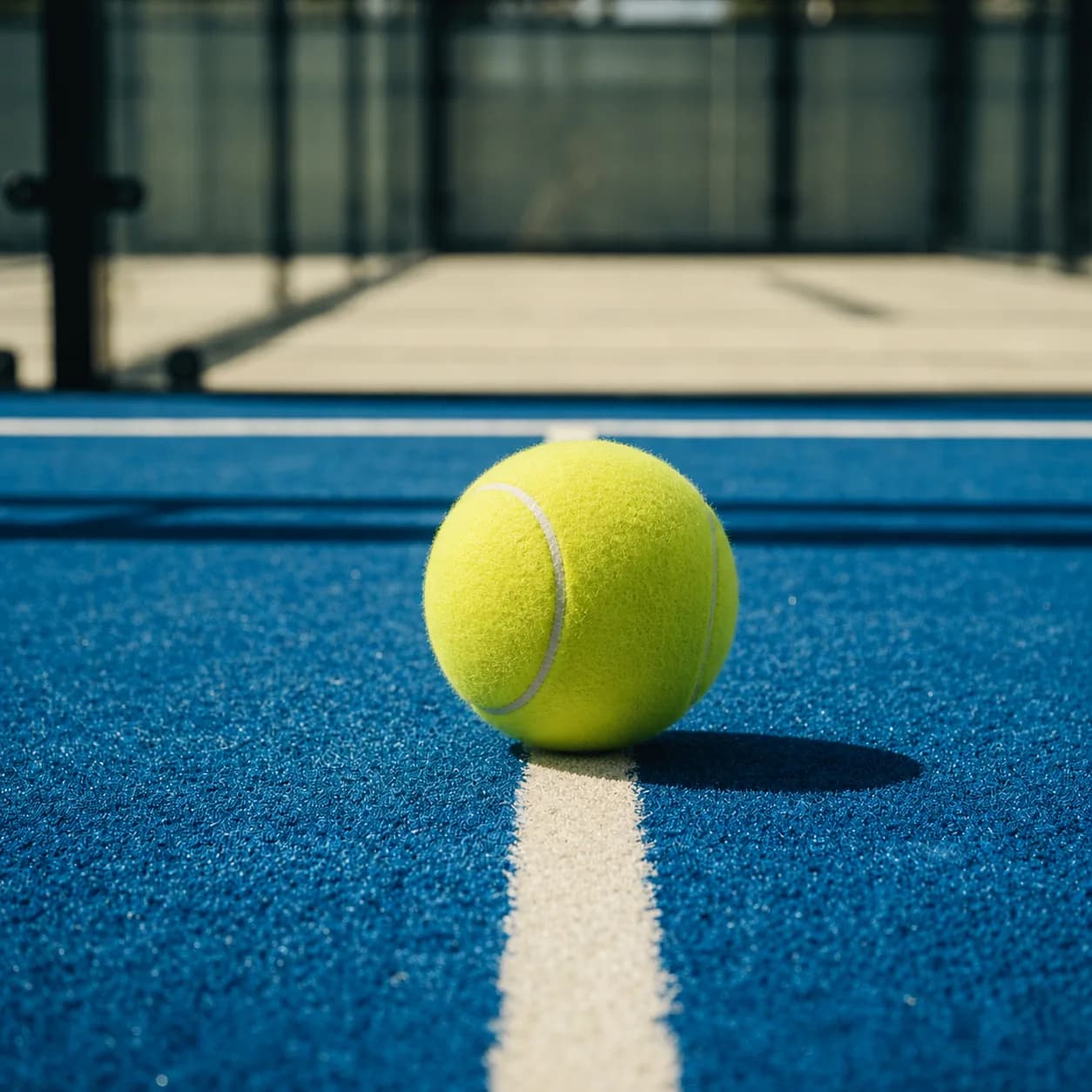
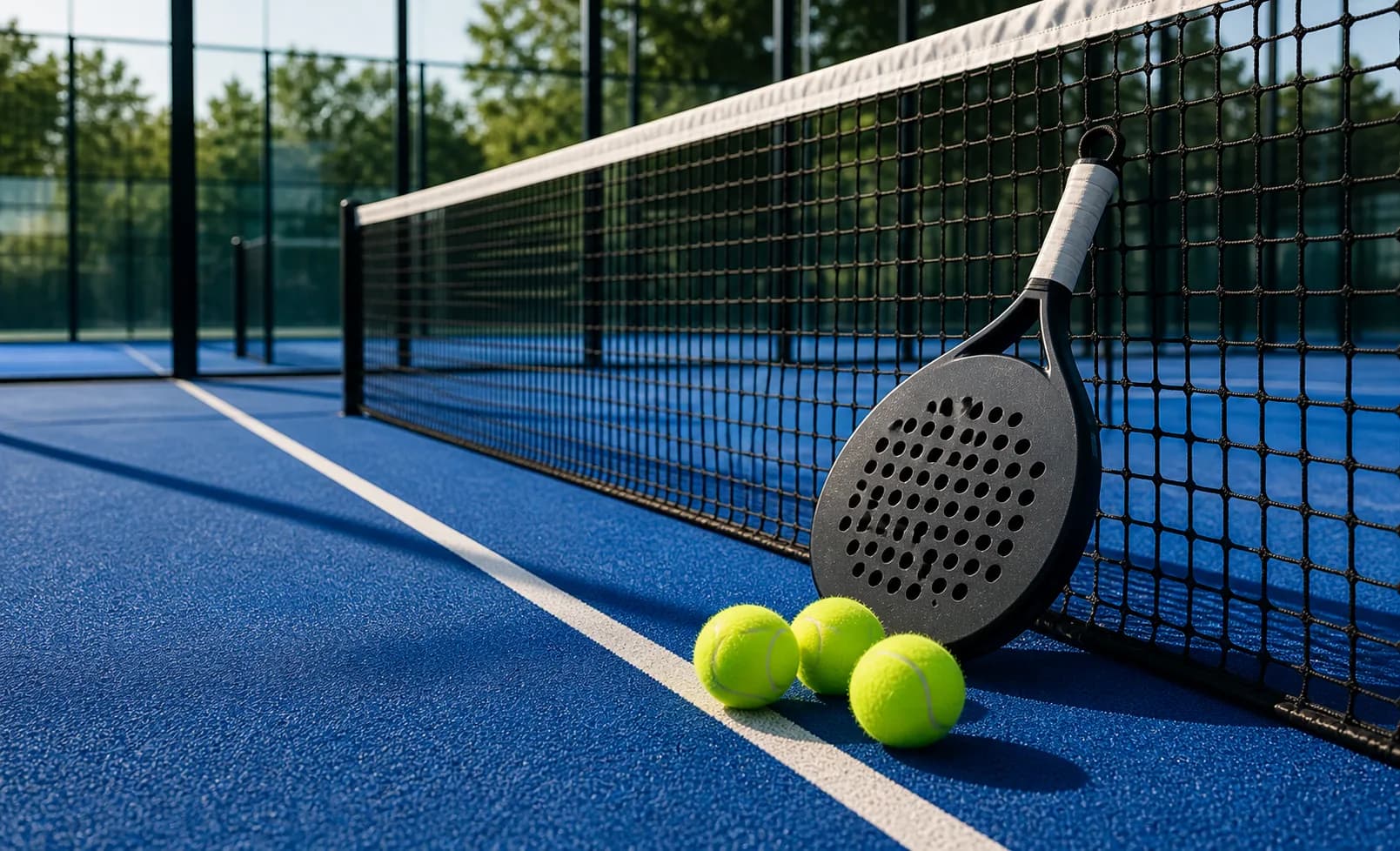
A padel court is about a third the size of a tennis court and is enclosed by a combination of tempered glass (the back and lower side walls) and metal mesh (the upper side walls). The ball is in play after rebounding off these surfaces — as long as it touched the floor first.
Tennis is played on an open court with no walls. A ball that gets past you is gone. In padel, the same shot is often a recoverable rally — you sprint back, let the ball come off the back glass, and play a defensive lob to reset.
Rackets & balls
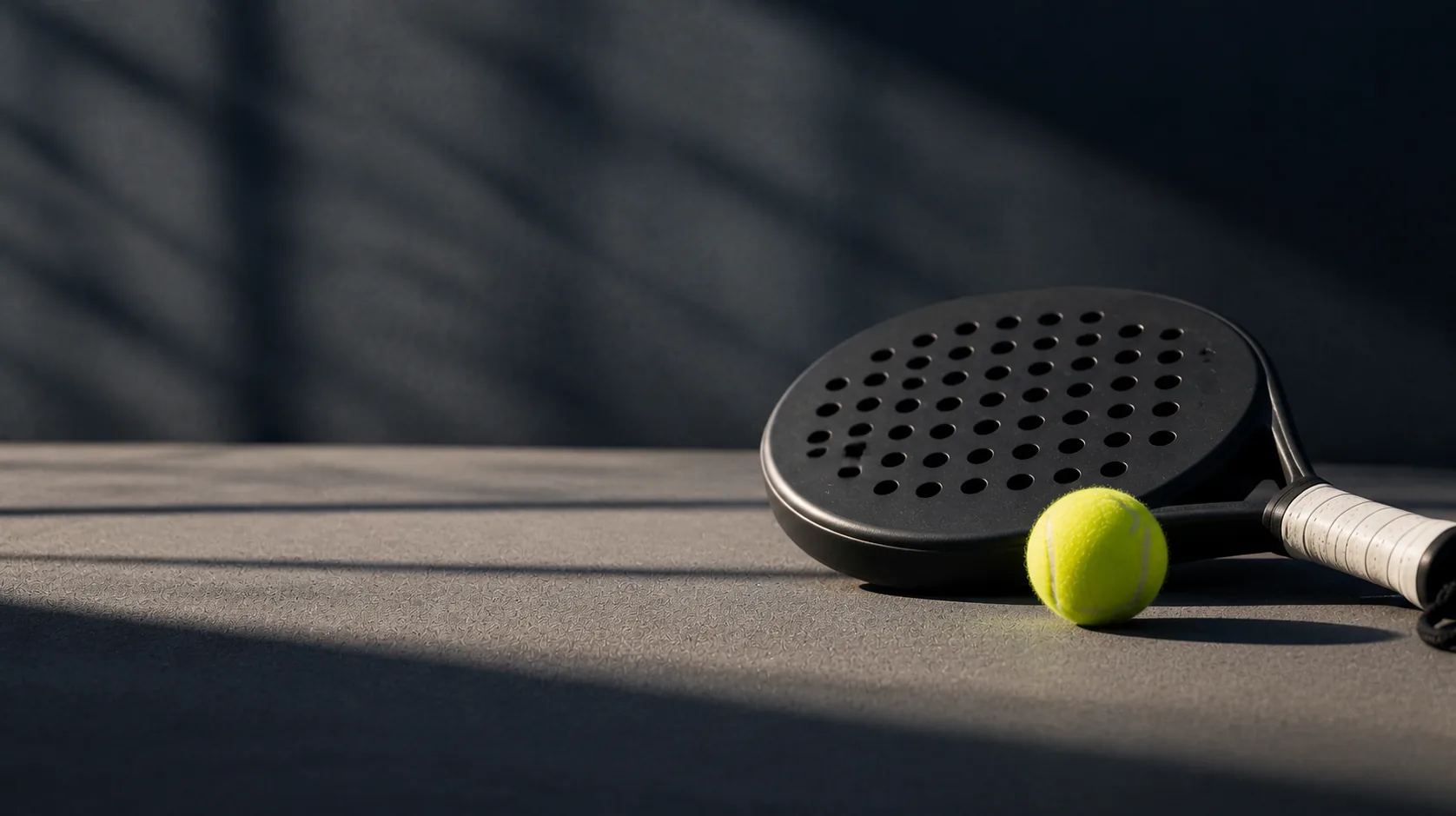
Padel rackets are solid, with a foam core (typically EVA or polyurethane) wrapped in a carbon or fibreglass face that has small perforations. They're shorter and rounder than a tennis racket and have no strings. Padel rackets are categorised by shape — round (control), teardrop (balanced) or diamond (power) — and by density. See our beginner padel racket guide for what to look for in your first racket.
Padel balls are essentially tennis balls with slightly lower internal pressure, which makes them bounce a bit lower and play a bit slower. For most amateur play, the difference is barely noticeable.
Serve & rally
The padel serve is underarm: bounce the ball, then strike it at or below waist height into the diagonal service box. This is one of the biggest reasons padel is easier to learn — there's no complex overarm motion to drill before you can start a rally.
Tennis serves, especially at amateur level, are often where matches are won or lost. A second serve into the net at break point is a common amateur tennis disaster. In padel, the serve is rarely a winning shot in itself; it just starts the point. The interesting tactical work happens during the rally.
Learning curve & sociability
For most beginners, the difference in first-session enjoyment is dramatic:
- Padel: rally within minutes. Score points by the end of your first hour. Have fun straight away.
- Tennis: miss a lot of balls. Spend the first session mostly on serve mechanics and basic groundstrokes. Real points come later.
That low entry barrier is also why padel is more socialthan tennis for most players. You're always in doubles, on a small court, where you can chat between points, and with mixed-ability groups much more easily — a strong intermediate and a complete beginner can have a fun rally on a padel court in a way that's much harder in tennis.
Strategy & style of play
Tennis rewards power and consistency from the baseline: big serves, deep groundstrokes, controlled approaches and big swings on the run. Singles especially is about footwork and shot tolerance.
Padel rewards positioning, touch and patience. The team that holds the net controls most amateur rallies. Lobs, drops and angled volleys matter more than raw power. Smashes need to be played with intent — a flat, hard smash bounces off the back glass and comes right back at you. The signature padel shots — bandeja (defensive smash), víbora (hooked smash) and the "por tres" (out-of-cage smash) — are all about control rather than pace.
Cost
For amateurs, padel and tennis cost roughly the same in the UK — somewhere in the £15–£60 per 90 minutes of court hire range, depending on city, time and venue. Equipment is similar too: a starter racket and balls run £80–£150 either way. See our padel cost in the UK guide for a full breakdown.
Which should you play?
Both. But if you have to choose:
- Pick padelif you want to be playing real points in your first session, you'd rather play with friends than against them, you don't have hours to commit to lessons, you have slightly worn knees, or you want a sport with a strong social side.
- Pick tennis if you want a sport with a deeper skill ceiling, a richer professional context, the option to play singles, or you already have a tennis-playing community.
- Pick both if your local club has both — they complement each other beautifully and many players go through phases of focusing on one or the other.
Frequently asked questions
What's the main difference between padel and tennis?
Padel is played on a smaller, glass-walled court that you can play the ball off, only in doubles, with a solid stringless racket and an underarm serve. Tennis can be singles or doubles, has no walls, uses a strung racket and an overarm serve. Padel is significantly easier to learn.
Is padel easier than tennis?
Yes. Padel has one of the gentlest learning curves in racket sports — most beginners can rally and play points within their first session. Tennis takes weeks of practice to play even basic points. The smaller court, walls, slower ball and underarm serve all reduce the early difficulty.
Can a tennis player play padel straight away?
Tennis players adapt quickly to padel but often struggle initially with the underarm serve, the use of walls and the need for finer touch instead of raw power. After a couple of sessions, tennis players usually have an advantage thanks to footwork, court awareness and consistency.
Is padel better for older players than tennis?
Padel is widely considered more sustainable for older players: less running on a smaller court, a slower ball, doubles only, and walls that reduce how often you have to chase wide balls. Many former tennis players move to padel as they get older.
Is padel replacing tennis?
No — they coexist. Padel is growing fast and is taking some casual tennis players, especially in continental Europe and increasingly the UK. But tennis has a far larger global player base, more professional infrastructure and a different appeal. Many clubs now offer both.
If padel sounds like your sport, the next step is to play regularly — which is where Padel Loop comes in. We run structured amateur leagues across London, Birmingham and Nottingham. Join the waitlist to be matched with players at your level.